

In the varied globe of organization frameworks, the company sticks out as an extremely favored entity because of its one-of-a-kind features and benefits. A corporation is a legal entity separate from its proprietors, which indicates it has its very own civil liberties and obligations distinctive from those of its investors. This separation is critical as it provides restricted responsibility to the owners; to put it simply, the individual possessions of shareholders are protected from firm debts and lawsuits. Firms can own property, become part of contracts, file a claim against and be taken legal action against, and undergo tax. Frequently, they are extra complex than other business kinds such as single proprietorships or collaborations, needing much more substantial record-keeping, functional procedures, and compliance with both government and state laws.
The formation of a firm starts with the filing of Articles of Unification with the state government, which must consist of the firm's name, its function, the number of shares to be released, and the information of its signed up representative. Once integrated, the company has to adhere to certain architectural standards consisting of the visit of a board of directors in charge of significant decisions and looking after the firm's total direction. Shareholders, on the other hand, own the corporation via their shares yet their function in monitoring is normally indirect, influencing the firm with electing the supervisors and voting on major plans. This dual structure allows a company to harness specialist management while maintaining financiers adequately involved. Corporations can release supply to attract financial investment, a considerable advantage for raising resources. Furthermore, their continuous presence suggests a firm can proceed running beyond the life expectancy of its original creators, enabling lasting job preparation and financial investment.
Comprehending the Structure and Feature of Company Companies
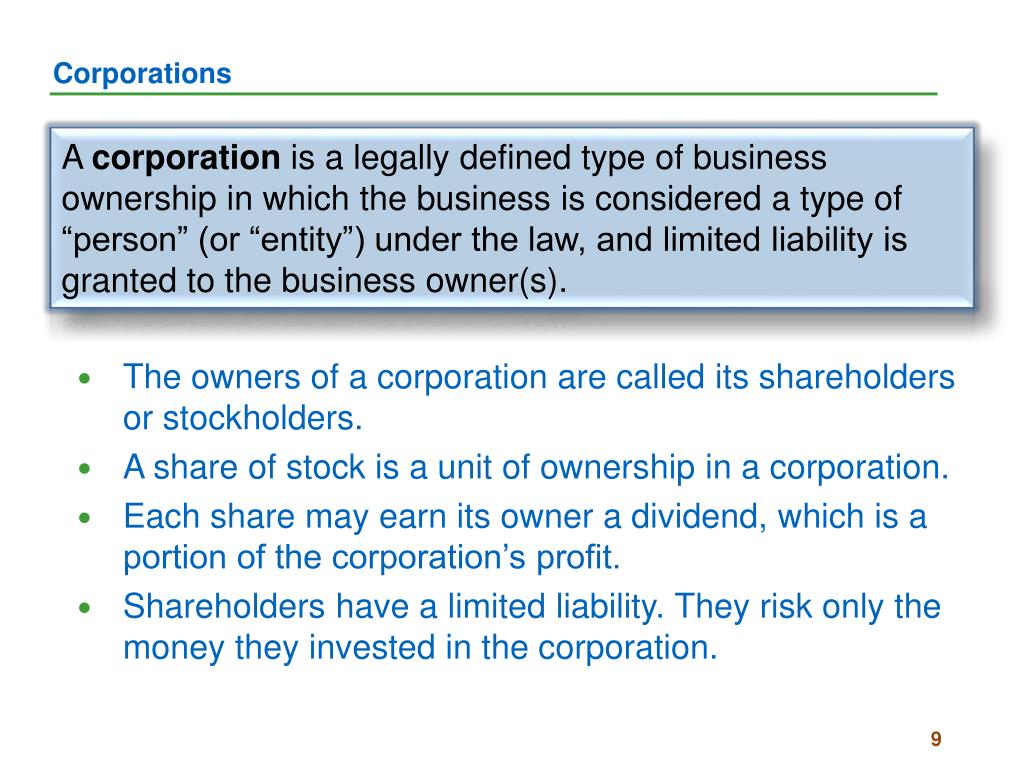
A business firm, commonly simply called a firm, is a legal entity distinctive from its proprietors, supplying an organized method to carry out business tasks. This lawful separation supplies the owners, who are called investors, with defense against individual obligation for the corporation's debts and obligations. The company itself is qualified of having assets, becoming part of agreements, and taking on commitments individually of its investors. Commonly, companies are established to seek various company objectives ranging from technology development to production or service shipment, scaling procedures more properly than individual-owned companies. Shareholders buy the firm by purchasing shares, which represent a claim on a portion of the firm's assets and incomes. These shareholders have the potential to make money from the firm's success via dividends and supply gratitude yet are not personally accountable for its financial obligations, which is a significant distinction from single proprietorships or partnerships. The governance of a firm is managed by a board of directors, chosen by the investors and in charge of making the major choices consisting of the consultation of magnates who handle the everyday operations. This layered framework permits companies to deal with even more facility, massive jobs and to raise significant capital by offering shares to the general public through stock exchange, a process understood as a going public (IPO). As Suggested Internet page , companies are likewise subject to specific governing settings relying on their geographical area and industry, which can include differing requirements for transparency, reporting, and responsibility. This regulatory structure is created to secure investors, lenders, and the public from deceptive or deceptive practices and to make certain secure, lasting business operations. The company kind therefore offers an effective means for activating funds and human funding, underpinning much of today's worldwide economic landscape.
Trick Elements of Corporate Structure and Governance
Recognizing the ins and outs of business corporations includes delving into the elements that comprise their framework and administration, components critical for their reliable operation and lawful conformity. At simply click the following internet site of every corporation is its board of directors, liable for significant policy choices and overseeing the overall management. This board is generally made up of individuals elected by investors, and they hold a fiduciary duty to shield the rate of interests of these investors. The board appoints senior executives, consisting of the CEO, that manage the everyday operations and implementation of the board's plans. These executives, consequently, manage groups across various divisions such as financing, advertising and marketing, and human sources, ensuring that the firm's tactical objectives align with its operational tasks. Additionally, business administration encompasses the practices, regulations, and procedures by which a company is routed and managed. It balances the interests of different business stakeholders such as shareholders, administration, consumers, providers, investors, government, and the community. Reliable governance frameworks cultivate a clear and responsible corporate environment, with strenuous systems for oversight to minimize threats and promote ethical methods. Furthermore, corporations are mandated to adhere to numerous laws which may vary across jurisdictions, covering elements like economic openness, labor legislations, and environmental guidelines. This regulatory conformity is not simply concerning adherence to legislations; it also shapes functional concepts and business methods, guaranteeing that business methods do not differ well established lawful and ethical standards. As firms run in increasingly interconnected markets, the demand for durable administration structures comes to be extremely important to manage intricacies and maintain development in an affordable international economic climate.
Comprehending the Structure and Capability of Business Corporations
Service companies, as formal entities, play a critical role in the global economic climate by facilitating financial investment, cultivating development, and producing job chances. Structurally, a corporation is a lawful entity that is different from its owners, giving a critical layer of lawful protection called minimal liability. This implies that the personal assets of investors are safeguarded from corporate financial obligations and liabilities. Commonly, corporations are organized to include investors that spend money or various other properties, a board of supervisors liable for supervising business affairs, and officers who handle day-to-day procedures. The hierarchical structure ensures that strategic decisions made at the board level are successfully applied by the officers, keeping a balance of power and operational effectiveness.
The capability of firms expands past simple profit generation; they are likewise important in driving socio-economic advancement. With resources build-up, companies can take on large-scale jobs and investments that could be unfeasible for specific entrepreneurs or smaller sized company entities. Furthermore, companies have the ability to increase funds from personal and public resources much more efficiently than other kinds of business structures because of their recognized trustworthiness and ability to issue supplies or bonds. click through the up coming website to set in motion substantial capital makes them principals in worldwide markets, affecting financial patterns and plan choices. The evolution of company administration techniques has actually been central to ensuring that firms operate transparently and are responsible to their stakeholders, including shareholders, workers, consumers, and the community at big. Efficient governance techniques assist in mitigating risks and promoting sustainable organization practices, which are significantly essential in a globe where corporate obligation is under scrutiny. The focus on sustainability has actually led numerous corporations to integrate ecological, social, and administration (ESG) requirements right into their service strategies, which not just assists in handling operational threats however likewise improves their competitiveness in a quickly developing organization landscape. In recap, business firms are complicated frameworks developed to make best use of performance, guarantee security, and foster growth in diverse private sectors. Their ability to run throughout boundaries, raise significant capital, and innovate continually makes them crucial in the contemporary economic situation. The obstacle stays to balance earnings with the wider social and ecological responsibilities that contemporary companies need to embrace to keep their authenticity and social worth. Authenticity Strategic Monitoring in Modern Firms
Strategic management plays an essential duty in the success of modern service firms, serving as the backbone for decision-making and long-term planning. In today's swiftly altering company setting, firms that can successfully plan are more probable to thrive and maintain competitive benefits. This procedure entails a deep analysis of internal capacities and exterior market conditions to make educated decisions that straighten with the company's objectives. For example, through devices like SWOT evaluation (Toughness, Weaknesses, Opportunities, Threats), companies can acquire vital insights right into their operational environment, assisting them to exploit on strengths, minimize weak points, bolster versus risks, and take emerging possibilities. Strategic monitoring prolongs past plain planning; it incorporates the execution of these approaches via precise job management and the placement of sources to attain the wanted end results. The integration of technology in critical monitoring, such as data analytics and AI-driven choice systems, has better transformed just how corporations forecast trends and respond to market characteristics. By leveraging these advanced technologies, companies can understand complicated information collections, predict consumer behavior, and readjust their methods in real-time, leading to even more responsive and dynamic business techniques. Strategic administration, consequently, not just guides firms with the labyrinth of competitive markets however likewise equips them with the tools to lead and introduce in their particular markets.